
Loading...
Serving Clearwater, FL and surrounding areas. (727) 296-0359
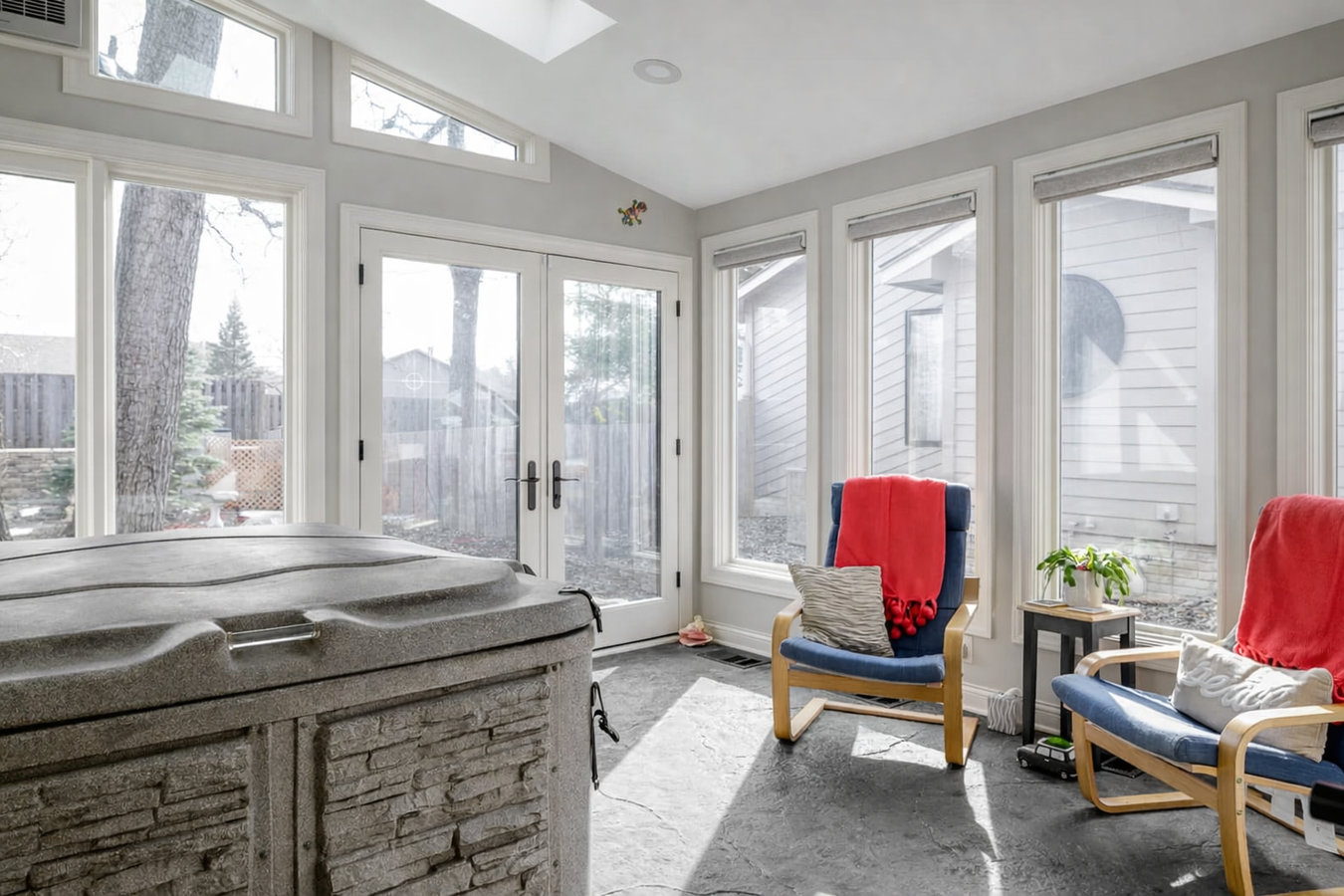
Your patio sits empty from May through October. We convert it into a climate-controlled sunroom you can actually enjoy every day of the year.
Your patio sits empty from May through October. We convert it into a climate-controlled sunroom you can actually enjoy every day of the year.
Patio-to-sunroom conversion in Clearwater turns your existing concrete slab into a fully enclosed, permitted room with walls, insulated glass, a proper roof, and a cooling connection, with most active construction running two to four weeks once permits are approved.
If your Clearwater home has a covered patio or screened lanai that sits unused from May through October, you are not getting much value from that square footage. A patio-to-sunroom conversion gives you a real room - one with climate control, proper windows, and a code-compliant roof - that you can furnish, use daily, and count as livable space. Because you already have a concrete slab, you have a head start that cuts down on foundation work compared to building from scratch. The result is more square footage and a space that actually works with Clearwater's climate instead of fighting it.
If you are weighing whether a conversion makes more sense than a full new build, our deck-to-sunroom conversion page covers the differences in scope and cost - useful reading if your existing outdoor structure is a raised deck rather than a ground-level patio.
If you step outside in July and turn right back around because of the heat and humidity, that is a clear signal the space is not working for you. Clearwater's summers run long and hot, making uncovered or unenclosed patios genuinely uncomfortable from May through October. A climate-controlled sunroom gives you that square footage back for all twelve months, not just the mild ones.
Screen enclosures in Florida take a beating from sun, salt air, and storm debris. If your current screens are torn, the frame is rusting, or the panels are sagging, you are already facing a repair or replacement cost. That is a natural moment to ask whether upgrading to a full sunroom makes more financial sense than re-screening - the incremental cost difference is often smaller than homeowners expect.
In Clearwater's sandy soil, patio slabs from the 1960s through 1980s can shift and crack over decades of wet-dry cycles. If you see cracks across the surface or notice water pooling in one corner after a storm, the slab has moved. Addressing this now - as part of a conversion - is far less disruptive and expensive than discovering it after the walls are already up.
If your family needs more space but a full new addition feels like a bigger project than you want to take on, your existing patio slab is a head start. The foundation work is largely done. A conversion is significantly less disruptive and less expensive than building from bare ground, and the finished result is a permitted, livable room that adds to your home's appraised square footage.
Every conversion starts with an honest assessment of your existing slab - whether it is solid enough to build on or needs leveling and reinforcement before framing begins. From there, we handle the full scope: framing the walls, installing impact-rated glass that meets Clearwater's wind-zone requirements, completing the roof, and connecting the room to your home's cooling system. All work is pulled through the City of Clearwater's permit process so the finished room is legal, insurable, and properly counted as livable square footage. For homeowners who want a finished space that rivals any other room in the house, we offer fully climate-controlled builds with insulated glass and a dedicated cooling system. If your existing patio has a roof structure already in place, a enclosed patio room may be a more targeted option worth comparing.
For homeowners who want to explore what the finished space could look like before committing to a scope, we offer a design consultation as part of the estimate process. Our deck-to-sunroom conversion service handles the same process for raised deck structures, which involve different structural requirements than a ground-level slab. We are happy to assess both types of outdoor space and tell you honestly which path makes more sense for your property.
Best for homeowners primarily wanting spring and fall use, with screened or single-pane windows and no cooling tie-in.
Best for homeowners who want the room usable every day of the year - fully insulated, impact-rated glass, and a dedicated cooling system.
Best for homes with a solid, level slab - saves on foundation work and keeps the build timeline shorter.
Best for older Clearwater homes where the existing slab has cracked or settled - we address the foundation first so the finished room stands on solid footing.
Clearwater gets intense heat and humidity from roughly May through October, which makes an unenclosed patio genuinely unusable for nearly half the year. That is not a minor inconvenience - it means a significant portion of your home's outdoor footprint is effectively wasted for months at a time. Clearwater also sits along the Gulf Coast in a designated high-wind zone, which means Florida's building code requires any new enclosure to meet specific hurricane wind and impact standards. This applies to every window, door, and roof panel in a conversion project. These requirements are not optional, but they also mean your finished room is storm-resistant and insurable in a way that a cheaper, non-compliant build would not be. Many of Clearwater's existing homes also have patio slabs poured in the 1960s through 1980s - decades of sandy soil and Florida rain can cause settling and cracking that a proper contractor surfaces and fixes before enclosure work begins.
We serve homeowners across the Clearwater area and into the wider Tampa Bay region, including Largo and Safety Harbor, where homeowners face the same coastal climate conditions and building code requirements. Getting the conversion right the first time - structurally, legally, and thermally - matters everywhere in this region, not just in Clearwater proper.
You do not need a detailed plan to reach out. A rough sense of your patio size and what you want to use the room for is enough to start the conversation. We respond within one business day.
We visit your property to measure the space, inspect the slab condition, and discuss how the room will connect to your cooling system. You leave this meeting with a written cost range - not a vague ballpark - that accounts for any slab work needed.
We submit the permit application to the Clearwater Building Department and help you prepare any documents your HOA needs. Permit review takes two to six weeks - we handle all follow-up so you never have to call the building department yourself.
Active construction runs two to four weeks for most standard conversions. City inspectors check the work at multiple stages. When the room is complete, we walk through it with you - every window, door, and switch - before we consider the job done.
We will visit your property, assess your slab, and give you a written quote at no charge. No obligation, no sales pitch - just an honest look at what your conversion will cost and how long it will take.
(727) 296-0359One of the most common mid-project surprises in patio conversions is discovering that the concrete slab needs more work than expected. We assess your slab thoroughly during the estimate - before you sign anything. If it needs leveling or reinforcement, you know the real number upfront and can decide how to proceed before any money changes hands.
Every conversion we build in Clearwater uses windows and doors that meet Florida Building Commission requirements for this wind zone. You receive documentation confirming your materials are code-compliant - something that matters for your homeowner's insurance and for any future home sale.
We pull every permit through the City of Clearwater Building Department in our contractor's name. That means we are legally accountable for the work, and city inspectors check it at multiple stages before anything gets signed off. You can verify active Florida contractor licensing independently through the state's Department of Business and Professional Regulation in minutes.
Many Clearwater neighborhoods - including communities in Countryside and Feather Sound - have HOA architectural review requirements for exterior additions. We know what these associations typically need and help you prepare a complete submission. We flag HOA requirements at the very start of the project, not after a contract is already signed.
These proof points connect to one outcome: a conversion that is legally built, thermally sound, and fully documented for insurance and resale. That is what it means to do this work correctly in Clearwater.
For raised deck structures rather than ground-level slabs - covers the additional structural assessment and foundation work a raised platform requires.
Learn MoreA focused option for patios that already have a roof structure in place and primarily need walls and windows to become a usable room.
Learn MoreClearwater contractor schedules fill up - the sooner you reach out, the sooner your conversion is on the calendar and your patio becomes a room you actually use. Call or send a message for a free written estimate.